






The Tension Between Expertise and Client Control
When you hire someone for their expertise, the expectation is simple: they’ll guide you toward the best possible result. But often, things don’t play out that way. Clients override the very advice they paid for.
This isn’t unique to any one industry.
A Common Dilemma Across Professions
Ask a midwife, a designer, or a consultant. You’ll hear versions of the same thing: “They brought me in because they trusted my skills… then ignored my guidance.” It happens in tech, healthcare, creative work, and everything in between.
Take birth work. In Sage’s recent podcast episode, midwife Jillian Young explains how she offers her clients detailed options based on years of experience. She avoids pushing her opinion unless asked, but when something really matters, she’ll speak up. Still, her role is to support—not control. That’s a delicate balance.
In creative services, the stakes are different but still real. If a client veers from proven design workflows, they risk delays, increased costs, and subpar outcomes. As one of our founders put it: “You’re hiring me not to say yes to every request, but to guide you to the best end result.”
And yet, some clients still try to steer the wheel—often without fully understanding the consequences.
Respecting the Process You’re Paying For
Here’s a simple way to think about it: if you hire a contractor to remodel your kitchen, you probably shouldn’t dictate how they frame the walls. You can choose the tile and colors, but you’re not the one checking for load-bearing structures.
The same goes for digital work. When a client overrides best practices, it may not break things right away. But that decision can snowball—affecting everything from responsiveness on mobile to how long the site takes to load. The fix? More hours. More budget. More frustration.
Clients don’t always see the ripple effect until it’s too late. But that’s what experts are for—to predict those outcomes ahead of time.
The Professional’s Role: Advisor, Not Order-Taker
Clients deserve a voice in the process. But when they hire a professional, they’re not hiring a pair of hands—they’re hiring a brain, too.
Offering Guidance, Not Just Deliverables
Experts should never just execute on blind instruction. Our job is to listen, interpret, and then advise on the best path forward.
One of the most powerful phrases we’ve used internally is this: “Strong opinions, loosely held.” That means having conviction in your process and your expertise—while staying open to better ideas.
The best outcomes come when professionals aren’t afraid to say, “That won’t work, and here’s why.”
Drawing Boundaries with Confidence
This doesn’t mean being stubborn. It means knowing when to push back, and how to do it in a way that keeps the relationship intact.
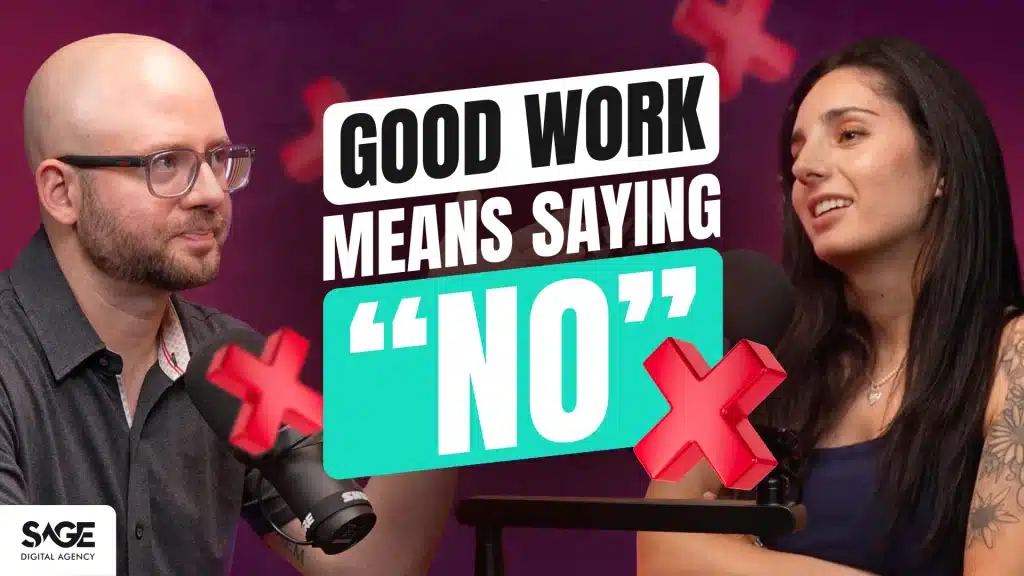
Boundaries are part of good collaboration. Saying “no” isn’t rejection. It’s protection—of the work, the timeline, and the client’s goals.
Tone matters. Timing matters. But silence isn’t the answer.
A Framework for Navigating Client Pushback
Knowing why you need to stand firm is one thing. Knowing how to do it is another. Here’s a framework that’s worked well for us (and countless others):
Step 1 – Educate Early and Often
Start before the first draft. Walk clients through how your process works and why it matters.
This shouldn’t be hidden in a slide deck. Use the kickoff call to set expectations. Make it clear that collaboration is welcome—but overriding the process introduces risk.
Clients aren’t mind readers. The more upfront you are, the fewer surprises (and tensions) down the road.
Step 2 – Signal When You Disagree
When something feels off, say so. Don’t wait for damage control mode.
And don’t do it via email.
Live video or in-person conversations are better for nuance and tone. As Alex from Sage explained in the episode, “I’ll say, let’s talk on Zoom first. Because my fear is that we’ll undo good work just to meet a subjective preference.”
Clarity beats compliance. Every time.
Step 3 – Offer Alternatives, Not Ultimatums
People don’t respond well to being told “you’re wrong.” So when you need to redirect, come with options.
Plan A, B, and C.
Lay out the pros and cons of each. Then guide the client toward the option that respects the strategy, the timeline, and the creative integrity of the work.
This is where trust gets built. You’re showing leadership without forcing a decision.
Step 4 – Know When to Walk Away
Not every relationship works out. And that’s okay.
If you’ve explained your process, raised concerns, and offered compromises—and things still feel misaligned—it might be time to move on.
“I told a potential client recently, ‘That’s just not my way. I have a system, and I can’t do it your way,’” Alex shared on the podcast. “And if it doesn’t work out, that’s fine. It saved us both a lot of future frustration.”
What Too Many Professionals Get Wrong
This tension between client wants and expert advice isn’t new. But many service providers still stumble by making two common mistakes.
Mistaking Client Service for Compliance
Good service doesn’t mean saying yes to everything.
Over-accommodating may seem polite, but it weakens the relationship. Clients may start to doubt your leadership, or worse—blame you when their choices backfire.
You can be collaborative and firm. You can listen and still lead. Those aren’t opposites. They’re partners.
Undervaluing Their Own Process
Your process is a product. If it works, you have to defend it like one.
You’ve refined it for a reason. It saves time, improves outcomes, and reduces stress. When you throw it out to please someone else, everyone loses.
Trust isn’t built on obedience. It’s built on consistency and clarity.
Client Scenarios: How This Plays Out in Real Life
The Designer vs. the Oversteering Client
A recent project started strong. Clear brief, great rapport. But soon, the client began requesting design changes that strayed from established UX principles.
At first, the changes seemed small. But over time, they introduced layout issues, slowed development, and added extra QA rounds. Costs rose. Timelines stretched.
The fix wasn’t more design—it was a candid conversation. A call was scheduled. The designer explained the consequences. They realigned and got back on track.
Lesson: intervene early. Be clear about what trade-offs the client is making.
The Midwife Who Offers Without Pushing
Jillian doesn’t tell clients what to do. She presents options—Plan A, B, C—and lets them decide.
But she doesn’t stay silent when it matters. “If you ask for my opinion, I’ll give it. Otherwise, I stay neutral,” she explained on the podcast.
Her goal isn’t to control. It’s to support. But behind that calm approach is deep knowledge and conviction.
That mix—expertise plus respect—is what makes people trust her.
Your Process Is the Product
Hiring a pro means more than just outsourcing a task. It means buying into their process.
It means trusting that they know what they’re doing, and that following their lead will get the best results.
Sure, there’s room for collaboration. But not micromanagement. When clients let experts lead, everything works better—creatively, technically, financially.
As one client told us: “The reason I hired you is because you took the time to explain. You showed me your face. You gave me confidence.”
That’s the bar.
Keep exploring
 Web DesignWhat to Ask When Hiring a Digital Marketing Agency: How to Choose the Right AgencyRead the guide
  InsightsHow to Choose a Web Design Agency to Work WithRead the guide
 Want help with this? See our digital marketing services.