
A client called last week. Big contract. “How’d you find us?” I asked.
“Asked Copilot who I should hire.”
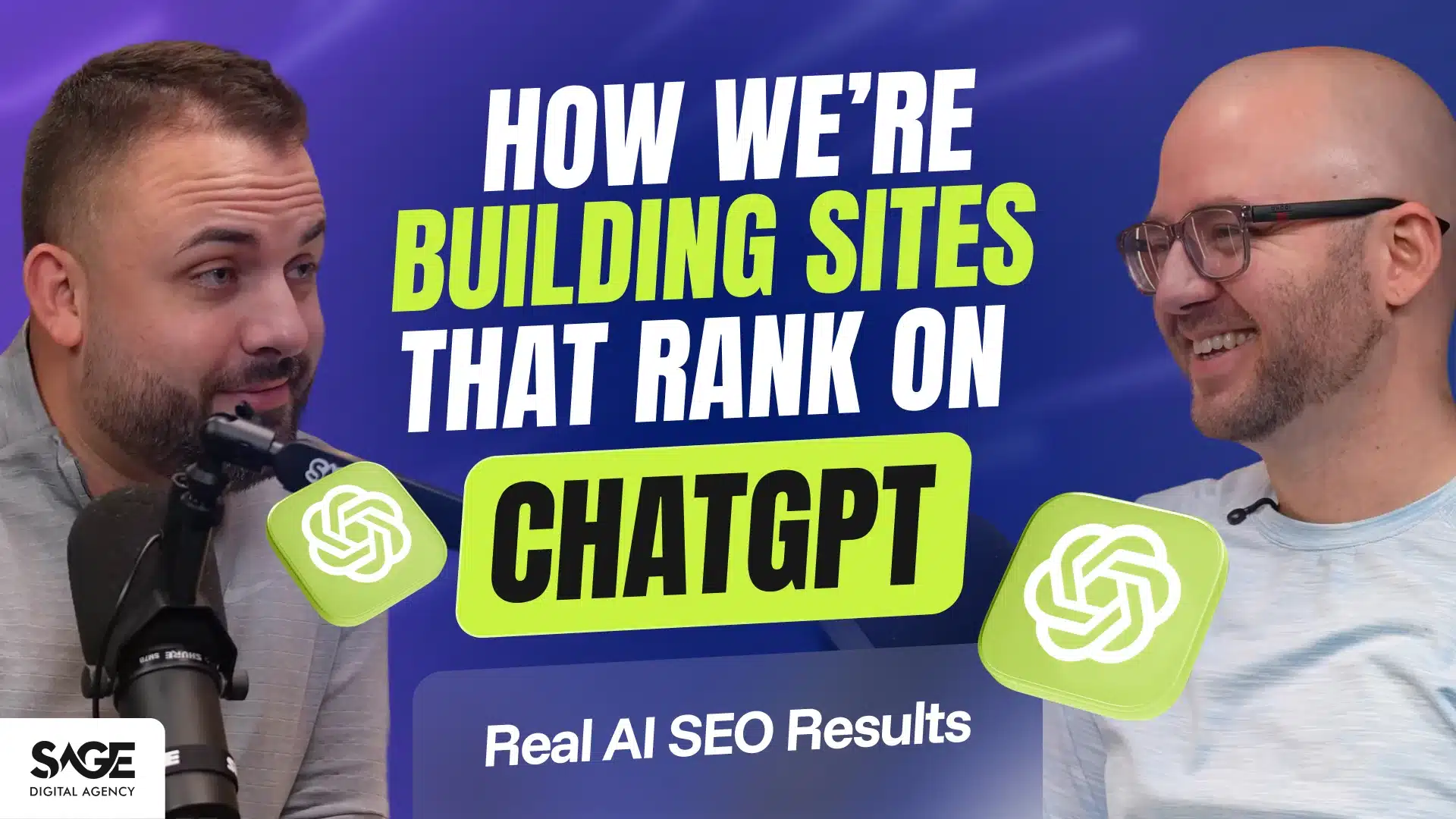
That’s the new reality. People aren’t just Googling anymore. They’re asking ChatGPT, Copilot, and Gemini for recommendations. And if your website isn’t built to show up in these AI tools, you’re invisible to a growing segment of buyers.
Here’s what’s actually working right now—and what’s just expensive smoke.
The AI SEO Shift Nobody Saw Coming
Traditional SEO was a scam for years. Agencies charged $300-500 monthly with vague promises about traffic. Most couldn’t rank their own sites.
Now we have language learning models changing everything. The first time I saw “ChatGPT” in my lead tracking, I thought it was a fluke. Then another came through. Then a multinational company found us through a blog post about submitting proper RFPs to web design companies. I’d never even looked at that content after publishing it.
This isn’t theoretical. It’s happening right now with measurable business impact.
The knee-jerk reaction? “Great, I can cut my ad spend.” Not so fast. Getting found in LLMs takes real work. There’s no magic switch. Just like old-school SEO, there’s plenty of smoke and mirrors from people selling AI optimization services they don’t understand themselves.
What Makes Websites Rank in AI Systems
Most agencies will tell you ranking in ChatGPT or Copilot requires thousands of dollars monthly. That’s not true.
You need the right infrastructure. Your site needs to be set up correctly from day one. Schema markup. Proper heading structure. Content that actually answers questions.
But infrastructure alone doesn’t cut it. You need a content strategy that feeds these systems what they’re looking for.
Here’s what works:
Video content comes first. Two shorts and two long-form videos on YouTube every week. Take those videos and convert them into two properly optimized blog posts with full schema markup. Post video content to your Google My Business profile.
There’s a direct connection between social media activity and organic rankings. Every organic post you publish—especially video—shows up on the first page of Google. These systems are scraping everything.
The question becomes: who creates this content?
Why Content Writers Can’t Replace You
Hiring a content writer seems logical. They know how to write, right?
Wrong approach.
No content writer knows your business like you do. They can’t articulate value the way you can. They don’t live and breathe your work. They haven’t seen the pain points. They don’t know what actually matters to clients versus what sounds good in a blog post.
When you record yourself talking about real subjects that provide genuine value to clients, you create something no hired writer can match. You speak to actual problems you’ve solved. You reference specific situations. You sound like someone who knows what they’re talking about because you do.
That authenticity matters. AI systems can detect it. Potential clients can feel it.
One client found us through content about proper RFP submissions. Another asked Copilot for recommendations and got our name. These aren’t accidents. They’re the result of putting real expertise into content that answers actual questions.
The video content serves multiple purposes. Long-form goes on YouTube. Gets converted to blog posts. Cut into shorts for social media. Used for remarketing and prospecting ads.
Speaking of ads: creative has a shelf life now. What worked six months ago doesn’t work today. You need fresh content constantly. Recording regular video kills multiple birds. You get content for AI rankings and fresh creative for paid campaigns.
The Design Process Most Agencies Skip
Want to know why most websites fail? They skip the design phase.
Agencies go straight to Elementor or another page builder and start throwing pages together. Seems faster. Feels efficient. Results in endless revisions and a mediocre final product.
The right way: design in Figma first.
Figma is the gold standard. You design desktop and mobile versions of every single page before touching a page builder. It’s like architectural plans before pouring concrete. You wouldn’t frame a house without blueprints. Don’t build a website without proper design.
This matters for AI ranking too. When you design first, you plan heading structures that follow best practices. You organize content hierarchy correctly. You make decisions about asset naming and compression that affect site performance.
If you hand developers a 17-megabyte image called “group_73457.png,” you’re setting everyone up for failure. Proper design includes export processes. Compressed files. Logical naming conventions. Structure that translates cleanly to development.
Some agencies do wireframes—gray boxes with placeholder text. That’s a waste of time. Go straight to full design. Why look at a sketch when you can see the actual thing?
Realistic Timelines for Professional Websites
“How long will this take?”
Wrong question. Better question: “How fast can you respond to feedback?”
It takes two to tango. Projects stall when clients disappear for weeks at a time. One client wanted to launch a massive site in 12 weeks. Great goal. Then they didn’t respond for four weeks. That’s a problem.
Here’s a realistic timeline for a 25-30 page website:
Week one: homepage design approved in Figma. Not wireframes. Full design.
Weeks two through four: interior page designs with feedback rounds. Content development happens simultaneously. Mobile versions created. Assets exported with proper naming and compression.
That’s three to four weeks for design when everyone’s communicating.
Development is different. A site that size requires 60-75 hours of Elementor development. A smaller 10-page site? More like 35-40 hours. You can’t rush quality development.
Smart agencies schedule development before design approval. Why? Because if you wait until designs are done to find a developer, you’re looking at delays. Projects stack up. You miss launch dates.
Some developers prefer working on one project exclusively. Others like switching between two projects to stay fresh. Either approach works if the time is allocated properly.
Bottom line: 90 days from kickoff to launch is realistic for a professional custom website. That includes design, development, content creation, and quality control.
Why Template Sites Don’t Cut It Anymore
Squarespace is fine. Wix is even better—for some uses.
If you need a digital business card, templates work. If you’re spending serious money on ads to drive traffic, templates are a disaster.
Try maneuvering a Wix site. Try making real changes. It’s wireframe-level difficulty for basic edits. The drag-and-drop promise is a lie. You can’t build something meaningful in an afternoon with a glass of wine.
When you’re investing in paid traffic, your website must convert. Conversion rate optimization matters. User experience matters. Site speed matters. Mobile performance matters.
A mediocre template site with serious ad spend is like pouring money into a bucket with holes. You’ll see measurable improvement just from having a properly built site.
That’s not sales talk. It’s math. Better site performance means better conversion rates means more revenue from the same ad spend.
The Elementor Advantage
Ask 20 developers what page builder they prefer. Nineteen and a half will say Elementor.
It’s the industry standard for a reason. Clean code. Flexibility. Widespread adoption means you’re not locked into proprietary systems.
That last point matters. If you fire your agency later, you need to be able to take your website elsewhere. If it’s built in some custom framework only one person understands, you’re stuck.
Elementor is an asset you own. Pay for development once. Take it to another agency if needed. No starting over. No rebuilding from scratch.
The right approach: incremental improvements over time. Update the header and footer next year for a fresh look. Change mobile navigation when you see something better. Improve sections gradually.
The foundation stays solid. You build on it instead of replacing it every few years.
What You Must Own
Never let an agency own your critical assets.
Own your website. Own your Google Ads account. Own your Google My Business profile. Own your domain. Know where your site is hosted. Know where DNS is managed.
Most business owners have no idea where their site lives. That’s fine until there’s a crisis. Site goes down. Emails stop working. Then it’s panic mode.
One client had no idea where anything was hosted. I asked during an RFP call. They couldn’t answer. Not a crisis yet, but it could become one. We figured it out together before problems started.
Agencies can host and support your site. That’s helpful. But you need login credentials. You need to know how to access everything. If the relationship ends, you walk away with your assets.
The Ten-Year Difference
What’s different between a website built in 2016 versus 2026?
The tools. The tech stack has advanced dramatically. Capabilities have expanded. What was cutting-edge a decade ago is standard now.
Ten years in digital is like a hundred years in other industries. Everything evolves faster.
That doesn’t mean rebuilding constantly. It means the foundation you build today needs flexibility for future improvements. New features get added to page builders. New optimization techniques emerge. Your site should adapt without starting over.
The Content Tools That Scale
AI helps with content creation, but it doesn’t replace humans.
There are solid tools for generating on-brand content quickly. Some built internally. Some third-party platforms. They help scale output without sacrificing quality.
But here’s what AI can’t do: replace your creative perspective. It can guide creative direction. It can help with structure. It cannot authentically speak about your business the way you can.
I’ve seen people try cloning themselves with AI video tools. Interesting technology. Not ready to replace the real thing. Maybe it’s getting there. Not there yet.
The winning combination: your expertise and experience creating the raw content, AI tools helping you format and optimize it for distribution.
When Professional Web Design Actually Matters
If your website is an afterthought, you’re leaving money on the table.
Most businesses treat their site like a necessary checkbox. Get something up. Make it look decent. Move on.
That worked when websites were digital business cards. It doesn’t work when your site needs to convert traffic, rank in AI systems, and support serious ad spend.
You can guarantee better results with proper CRO. You can measure the improvement. When the website functions correctly—proper structure, optimized content, strategic design—it’s impossible for it not to perform better.
The businesses winning right now are the ones taking their web presence seriously. Not just having a site. Having a site that works.
What the LLM Rankings Actually Mean
Getting found in ChatGPT or Copilot isn’t the same as ranking on Google page one.
These systems work differently. They’re looking for comprehensive, authoritative content that answers questions directly. They want structure. They want depth. They want real expertise.
Surface-level keyword stuffing doesn’t work. Thin content doesn’t work. Generic advice doesn’t work.
What works: detailed content about real problems with specific solutions. Examples from actual experience. Frameworks people can implement. Decision criteria for complex choices.
The infrastructure supports this. Schema markup tells AI systems what your content covers. Proper heading hierarchy organizes information logically. Internal linking creates topic clusters.
But the content itself has to deliver value. That’s where business owner involvement becomes non-negotiable.
The Smoke and Mirrors Problem
Just like traditional SEO became a fluff service, AI optimization is heading the same direction.
Agencies are selling services they don’t fully understand. Making promises they can’t keep. Charging premiums for work that doesn’t move the needle.
You need to make sure your site has the right infrastructure. That’s not expensive if done correctly during the initial build. You don’t need thousands monthly for “AI SEO services.”
What you need: proper technical foundation, consistent high-quality content, and strategic distribution. That requires work. But it’s work you can control.
The alternative is paying someone to manage a black box you don’t understand. That worked great in the old SEO days, right?
Frequently Asked Questions
How long does it take to start ranking in ChatGPT or Copilot?
There’s no guaranteed timeline. It depends on your content quality, site structure, and how frequently you publish. Most businesses see initial results within 2-3 months of consistent effort. The more authoritative content you create, the faster you’ll show up.
Can I use AI tools to create all my website content?
AI helps with structure and formatting, but it can’t replace your expertise. The best approach combines your knowledge with AI tools for optimization and scaling. Content that ranks well comes from real experience, not generated text.
Is Elementor really necessary or can I use Wix or Squarespace?
Template platforms work for basic needs. If you’re spending money on advertising or need your site to convert traffic into revenue, custom development with Elementor gives you control and performance that templates can’t match. It’s about matching the tool to your business goals.
How much should I expect to spend monthly on AI SEO services?
If someone’s charging thousands monthly for “AI SEO,” question what you’re actually getting. The infrastructure setup is a one-time cost during site development. Ongoing costs should be content creation and distribution, which you can control internally or outsource based on your capacity.
What’s the difference between ranking on Google versus ranking in LLMs?
Google ranks pages based on backlinks, keywords, and hundreds of other factors. LLMs look for comprehensive, authoritative content that directly answers questions. You need both, but the strategies overlap significantly—good content structured properly works for both.
Do I really need to create video content or can I just write blog posts?
Video provides multiple advantages. It converts to blog content, social media posts, and ad creative. You demonstrate expertise more authentically on video. AI systems increasingly index video content. That said, well-written blog posts still work if video isn’t feasible for your situation.
How often should I update my website to keep rankings?
Don’t rebuild your site constantly. Make incremental improvements—update headers, refresh content, add new pages addressing current topics. Major redesigns every 3-5 years are reasonable, but ongoing small improvements matter more than occasional overhauls.
What happens if I fire my web agency—do I lose my website?
If you own your hosting, domain, and have admin access to your site, you keep everything. That’s why ownership matters. If the agency owns these assets, you’re in a difficult position. Always maintain control of your critical digital properties.
Can I track which leads come from AI tools like ChatGPT?
Yes. Most analytics platforms can track referral sources. You’ll see traffic from ChatGPT, Copilot, and other LLMs in your referral data. Set up proper tracking from day one so you can measure what’s working.
Is it worth spending 60-75 hours on custom website development?
That depends on your business goals. If your website generates revenue, proper development pays for itself quickly through better conversion rates. If you’re not driving traffic or don’t need conversions, simpler solutions might work. Match your investment to your business needs.
Key Takeaways
Build your site for AI systems from day one. Schema markup, proper heading structure, and technical optimization aren’t optional anymore. These elements directly impact whether LLMs can understand and recommend your content.
Create content yourself or don’t bother. No content writer knows your business like you do. Record video about real topics that matter to your clients. Convert it to multiple formats. That authenticity is what ranks.
Design in Figma before development starts. This prevents endless revisions and creates a strategic foundation. You plan heading structures, organize content hierarchy, and make technical decisions that affect performance.
Own everything. Your website, hosting, domain, Google Ads account, and Google My Business profile should be under your control. Agencies can manage them, but you need access and ownership.
Expect 90 days for professional custom development. That includes design, development, and content creation. Faster timelines usually mean cut corners. Your responsiveness matters more than agency speed.
Use Elementor for long-term flexibility. It’s the industry standard, which means you’re not locked into proprietary systems. You can take your site elsewhere if needed without starting over.
Social media activity affects organic rankings. Video posts show up on Google’s first page. There’s a direct relationship between social presence and search visibility. Use it strategically.