

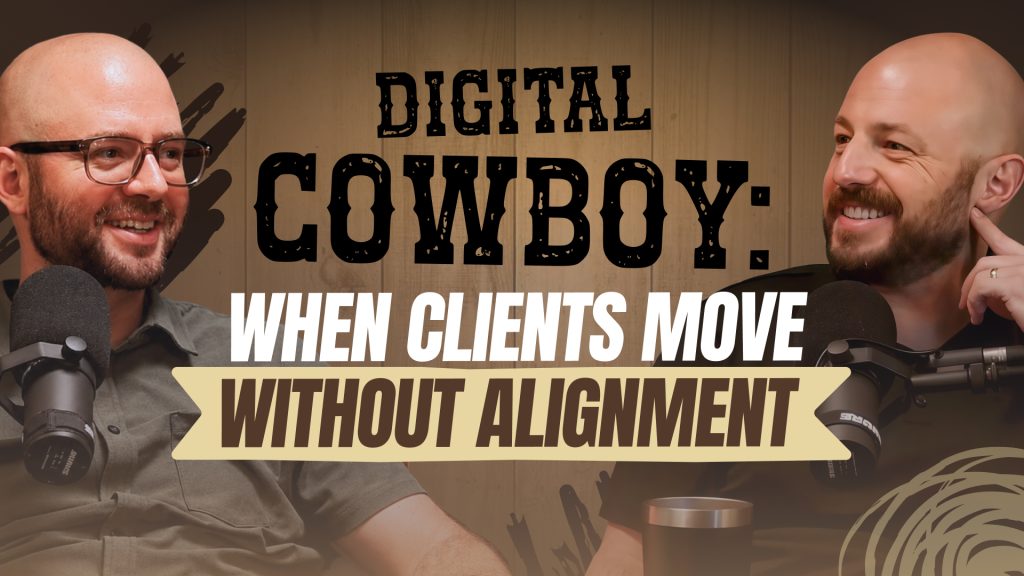
Digital cowboys: At Sage Digital Agency, we use this term for when a business hires a professional vendor then jumps ahead and makes website or campaign decisions with no review from the people hired to guide the work.
For example, a CEO wants to try a new plugin. They install it without consulting the pros. Suddenly, support tickets start coming in.
This is not a shot at clients. It is a warning about process. New ideas are fine. Random or rushed website and digital marketing changes are not because they can waste time and money.
What is a digital cowboy?
A digital cowboy is anyone within an organization who makes a marketing or website decision outside the agreed strategy after hiring a professional partner.
A digital cowboy can be the company owner, a C-suite leader, a marketing manager, an intern, or a second vendor brought in with no coordination.
The behavior usually looks small at first:
- A plugin gets added with no review.
- A form gets changed on a live page.
- A landing page gets launched outside the main site plan.
- A third party gets admin access to “help with SEO.”
- Paid traffic gets split across pages the agency did not build or tag.
Websites and paid media are connected. One unsupervised change can send bad data back to the algorithms that power Google and AI answer platforms.
Why business owners fall into this trap
Most clients do not make unannounced changes out of disrespect. They generally do it out of curiosity, pressure, confusion, or misplaced confidence.
AI tools lower the barrier to action
The availability of AI tools also compounds the issue. Today, almost anyone can generate copy, code, page layouts, or draft landing pages with AI tools.
A generated page may look fine and still send bad signals back to Google, or a generated form may work on the front end and still break tracking.
Internal pressure can lead to rushed decisions
A busy executive sees something potentially useful online, sends it to their internal team, and wants it made live fast.
The agency may not know the request exists. So, the client’s team does what feels easiest at the moment and adds it to the website.
The next day, the agency receives a support ticket that something has gone wrong. They then have to diagnose and fix the issue.
What can get hurt when clients go digital cowboy
Tracking and conversion data
Here are some examples:
- Tracking can get disrupted when a new form is installed.
- A page can carry the wrong tags.
- A team can add scripts that send mixed signals back to ad platforms.
Once any of these happen, campaign optimization starts working from dirty input. That matters a lot in paid media.
The platform learns from the data it receives. Bad conversion signals can push bids, audience targeting, and budget allocation in the wrong direction.
SEO and site structure
A random landing page becomes part of the site’s content footprint. If the page overlaps with existing targets, it can create keyword cannibalization.
If it ignores the design or internal structure, it can weaken the user path and scatter authority across disconnected assets.
User experience and design visuals
Making unplanned changes to a website can damage its UX as well as its look and feel.
For example, a nonprofit client of Sage Digital Agency once gave an intern admin access to their website, which had been built in a specific way.
That intern added a random page builder plugin and damaged the look of the site. We fixed it quickly, yet the lesson is plain: discussing changes first with the professionals is a good idea.
Accountability and support
If a company, their agency, and a third-party vendor all start making changes on the website at the same time, it can create chaos and make accountability more difficult.
For example, a company project manager starts seeing issues that should not exist on a site that has just launched. They submit a support ticket, and now the agency has to spend time asking what changed, who changed it, and whether the latest issue came from core work or outside edits.
This type of situation slows response time, raises costs, and strains trust.
Cases that show the risk
Case 1: A new website, then a surprise SEO vendor
An attorney hired Sage Digital Agency to build a site. After launch, the client brought in a separate SEO vendor without discussing it with us. Soon enough, support tickets started coming in that we had to address.
This case captures the heart of the digital cowboy problem. A company invests in expert work, then creates a side channel that can unintentionally alter the product.
Case 2: DIY landing pages start competing with managed campaigns
Let’s say, for example, clients build landing pages and run their own ads on those pages, even when an agency is already managing paid media elsewhere.
This dynamic can create split traffic and mixed data. Cost per click can rise. Reporting gets muddy.
Case 3: AI-generated launch, basic technical issue, no quick fix
A friend of Alex’s launched a website through an AI-assisted tool. After launch, the site had a basic DNS issue: it only worked with the “www” version of the domain.
The bigger issue was not that the fix was complicated. It was that the problem sat unresolved for days because no one involved had either the skill set, ownership, or urgency to fix it.
Lesson: AI can help get a site launched, but it does not replace technical oversight. Basic setup, DNS validation, troubleshooting, and post-launch checks still need someone who knows what they are doing.
The real value clients buy from professionals
People hire serious digital agencies for their judgment. You are paying for the call made by someone who has seen and worked with similar situations many times before.
A CEO may be excellent at running a business. That does not make that person the web designer, the ad platform operator, the analytics lead, or the technical SEO reviewer.
A better way to test ideas without breaking performance
Bring the idea to the partner first:
If you saw a tactic on social media, send it over. If you want a landing page fast, ask for it.
Whatever it is, a good partner will be able to review the idea, flag risk, and tell you whether it belongs as a live production asset.
Define what your team can edit safely:
Some edits are low risk. Some are not. The line should be clear before anyone touches the site. Safe edits generally include:
- minor copy updates inside approved page structures
- publishing content through an agreed workflow
- swapping approved media assets
Higher-risk edits usually include:
- new plugins
- new forms
- tag changes
- page template changes
- admin access grants
- new landing pages tied to ads
- any work by a second vendor on the same environment
Set one source of truth for production changes:
Every live change needs a home. One ticket system. One owner. One record of what changed and why.
Replace the partner if trust is gone:
If you do not trust the agency, move on.
Keeping a partner you do not trust, then working around them, is a bad setup in digital marketing.
Questions to ask before any website or campaign change
- Does this change touch a live production asset?
- Does it affect tracking, tags, forms, or conversions?
- Does it create a new page that may overlap with current search targets?
- Does it send traffic away from pages already used in paid campaigns?
- Does it require admin access for a new person or vendor?
- Does our agency know this is being proposed?
- Who owns cleanup if the change causes damage?
If your team cannot answer those seven questions in a clean way, the change should pause until the right people review it.
FAQs
What is a digital cowboy in marketing?
A digital cowboy is a person, either a sole proprietor or someone acting within a company, who makes website or campaign changes outside the agreed process established with their professional vendor. The risk comes from unsupervised action.
Why are unplanned website changes generally a bad idea?
Unplanned changes can alter tracking, design consistency, page structure, lead flow, and paid media performance. A small change on the screen can trigger larger problems in the background.
Is it wrong for clients to bring new ideas to their agency?
Not at all. New ideas are healthy. The problem starts when those ideas get pushed live with no review, no shared plan, and no record of who changed what.
Can AI tools replace a marketing or web partner?
AI tools can speed up work. They do not replace judgment, troubleshooting, technical review, or accountability for live assets.
What happens when a second vendor gets admin access to the site?
If there is no communication between all parties, then ownership gets blurred. The original partner may not know what changed or what pages were edited. That makes support harder and accountability weaker.
Can one landing page really hurt paid media performance?
Yes. A new landing page can split traffic, send conversions through the wrong path, or carry bad tracking. That can change how ad platforms learn from your account.
What should a client do if they no longer trust their agency?
Change partners. A weak fit is better solved with a clean transition than with hidden edits and side projects.
What should stay off-limits for internal teams without review?
New plugins, form changes, tag changes, admin access grants, new landing pages tied to campaigns, and edits by outside vendors should all go through review before they hit production.
Key takeaways
- Hire experts for judgment, not just output.
- Route every live change through one accountable process.
- Treat admin access like a risk decision, not a convenience.
- Do not split traffic or tracking with side projects hidden from your agency.
- Use AI to speed expert work, not to replace expert review.
- If trust is weak, replace the partner instead of working around them.
Keep exploring
 Web DesignWhy Most Business Websites Don’t Generate LeadsRead the guide
  Web DesignBeginner’s Guide to Landing Page DesignRead the guide
 Want help with this? See our conversion rate optimization.