






Effective websites with unique style, no templates, no middlemen.
Speed, security, and uptime, fully managed by our team.
Ongoing care and expert fixes—no delays, no outsourcing.
Experienced specialists dedicated to delivering high-quality work and real results.
A clear, structured approach that ensures efficiency, transparency & successful outcomes.
Transform your locations into a custom interactive map visitors can explore, click, and discover.
Uncover what’s holding your website back with AI-powered insights, prioritized fixes, and clear next steps.
We don’t just record content; we turn it into authority, visibility, and momentum.
Step into a world-class studio built for business leaders, founders, and subject-matter experts.
Custom Website Design

Custom-designed in Figma

Built in WordPress for long-term flexibility

Campaign, conversion, and event support

Ongoing management, hosting, and creative execution
When your website undersells your business, it affects trust. It affects growth. It affects conversions. It affects how clearly people understand what you do, who you help, and why your work matters.

Getting someone to the store is only the beginning. Confusing navigation, weak product pages, unclear value propositions, too many distractions, and friction during checkout can all reduce conversion rates. A strong ecommerce experience makes it easy for customers to understand the product, trust the brand, find what they need, and complete the purchase.
As catalogs grow, navigation can quickly become difficult. Categories, collections, filters, search, product variations, and related products all need to work together. Good information architecture helps customers find products faster and reduces the amount of effort required to shop.
Many product pages rely on a few images, a short description, and an Add to Cart button. Strong product pages answer the questions customers have before purchasing through better photography, clear benefits, specifications, reviews, FAQs, shipping information, related products, and intentional calls to action.
A large percentage of customers discover and shop from their phones, yet many ecommerce stores still create unnecessary friction on smaller screens. Navigation, product selection, image galleries, variants, carts, payment options, and checkout all need to feel effortless on mobile.
New products, promotions, collections, landing pages, apps, integrations, campaigns, and seasonal changes can gradually make a store slower and harder to maintain. The underlying structure needs to support ongoing merchandising and marketing without turning every change into a development project.
Revenue may come through multiple campaigns, channels, devices, and customer touchpoints. If analytics, advertising platforms, ecommerce events, and attribution are not configured correctly, it becomes difficult to understand what is actually driving sales. Reliable tracking gives the business better information for marketing and optimization decisions.
Consumer Brands & Retail
Consumer Brands & Retail
Consumer Brands & Retail
Consumer Brands & Retail
Consumer Brands & Retail
Consumer Brands & Retail
Analyze your website and uncover practical ways to improve engagement and conversions.
Free AI website audit. Done in under 2 minutes.
It should help your business work better online.
Podcast
January 8, 2026
A strong website for Ecommerce Brands should:
It supports communications, growth, conversions, engagement, and public perception all at once.
That is why we take this category seriously.


We start with the customer journey, not simply the visual design. Navigation, category structure, product pages, calls to action, merchandising, cart behavior, checkout, and mobile usability are considered together so the website supports both the brand and the buying process.
Yes. Sage works with both WooCommerce and Shopify. We design the customer experience in Figma first and then develop or implement the approved experience on the appropriate ecommerce platform based on the business, catalog, integrations, and operational requirements.
Sage currently promotes both WooCommerce and Shopify ecommerce design capabilities.
We organize categories, collections, menus, filters, search, related products, and other discovery tools around how customers actually shop. The goal is to reduce friction and help visitors move quickly from browsing to the products most relevant to them.
We design product pages around the information customers need to make a purchase decision. That can include stronger product imagery, benefits, specifications, variations, reviews, shipping information, FAQs, subscriptions, bundles, related products, cross-sells, and other conversion elements.
Yes. Sage can support paid media, SEO, landing pages, email strategy, analytics, reporting, conversion optimization, merchandising campaigns, and ongoing website improvements. Ecommerce performance usually requires ongoing testing and refinement rather than a one-time redesign.
We pay close attention to hosting, caching, image optimization, scripts, plugins, apps, database performance, integrations, and overall technical health. Ecommerce websites carry more operational complexity than standard marketing sites, so performance and ongoing management need to be treated as part of the system.

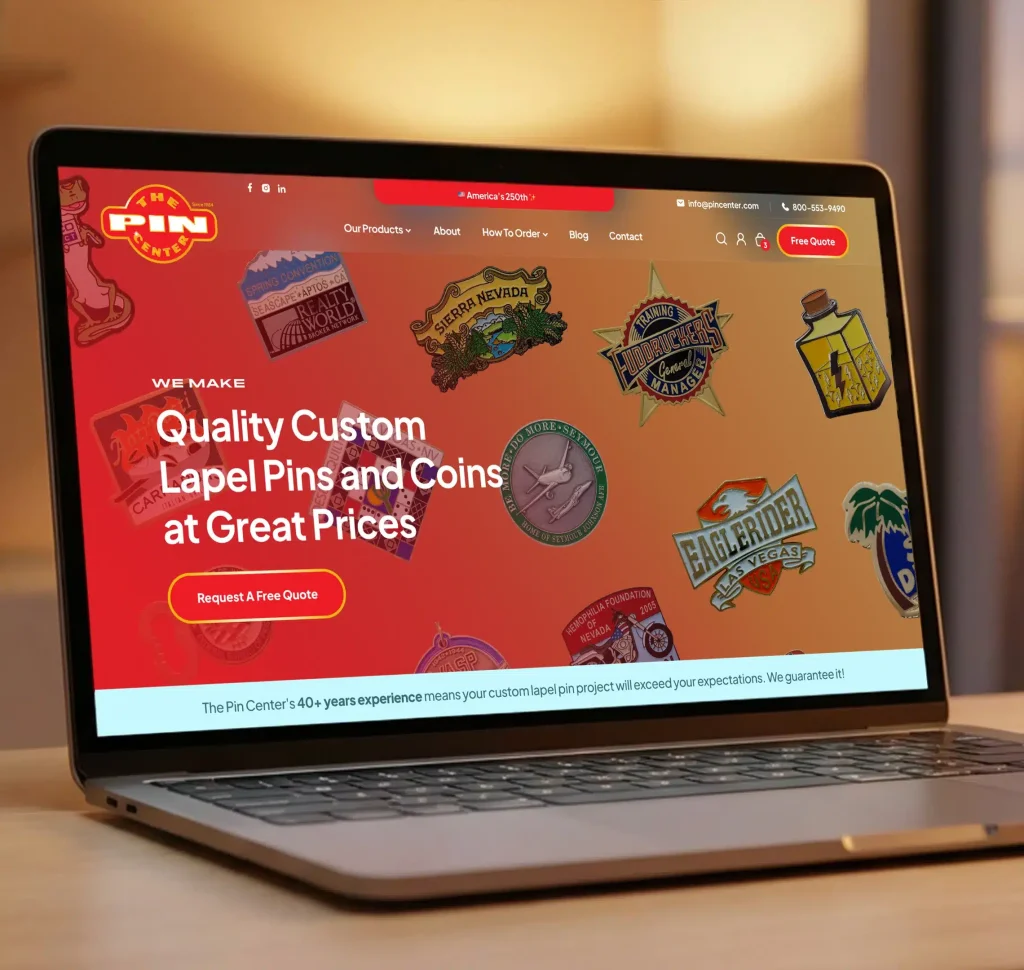
Pincenter
Pincenter sells custom lapel pins, coins, and related products through an ecommerce experience that needs to make a highly customizable product easy to understand and purchase.
Sage created a stronger digital experience around the brand, product presentation, navigation, and customer journey, helping organize a product offering that involves numerous styles, options, and purchasing considerations.
The result is an ecommerce presence designed to make product discovery easier while giving the brand a more polished and credible presentation.

Grillbots
Grillbots is a consumer ecommerce brand selling automated grill-cleaning robots and accessories.
Sage created a custom ecommerce website designed to make the product easier to understand, showcase how it works, and give the brand a stronger visual presence online. The experience combines product education, lifestyle imagery, mobile-friendly shopping, and clear purchase paths to help customers move from discovery to checkout.


When this isn’t clear, everything breaks down
If people don’t know where to go, they won’t take the next step.
We design, build, and grow high-performance WordPress websites through strategy, speed, and conversion-focused execution.
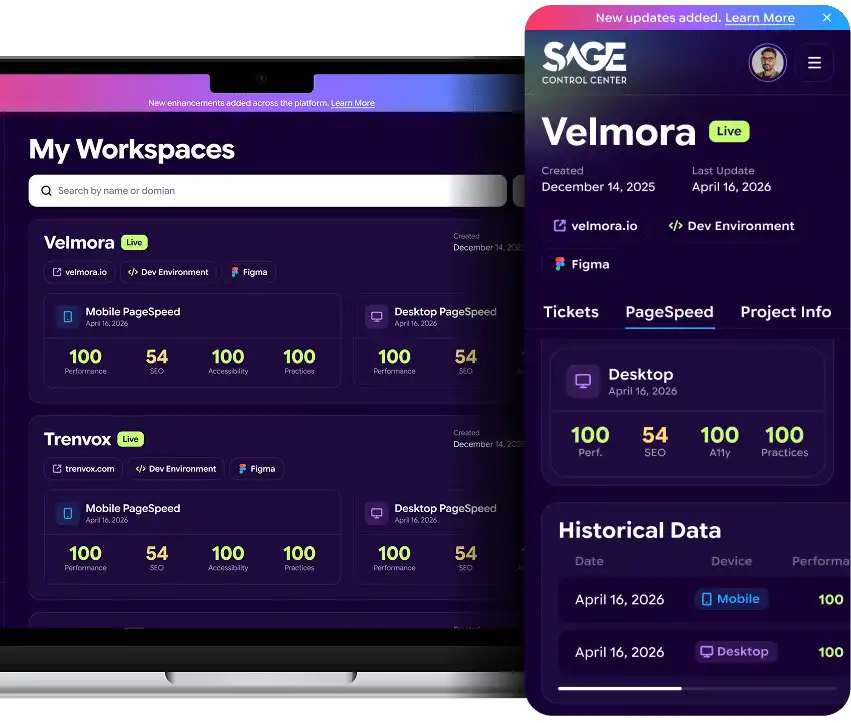
Powered by the Sage Control Center, your centralized dashboard for visibility, reporting, and ongoing management.
First, we create a sitemap based on what your visitors need, so every page has a purpose.
We move into visual design using Figma, where you’ll see and approve exactly how your site will look.
First, we create a sitemap based on what your visitors need, so every page has a purpose.
Before launch, we handle SEO setup, analytics, and security.
Once your site is live, we offer ongoing support and next-step recommendations based on your goals.
This matters because many businesses do not need another disconnected vendor. They need a capable team that can support the real work as it evolves.
Yes. We design ecommerce websites from scratch in Figma rather than starting with an off-the-shelf visual template. The structure and experience are developed around the brand, products, customers, and business goals.
It depends on the business. WooCommerce offers exceptional flexibility for companies already operating in WordPress or requiring a highly customized environment. Shopify can be an excellent choice for brands that prioritize a dedicated ecommerce platform and its ecosystem. We help evaluate the right fit based on your requirements rather than forcing every client onto the same platform.
Yes. Depending on the existing platform and technical condition, we can redesign the customer-facing experience while preserving products, customer data, order history, integrations, or other important parts of the existing ecommerce operation.
Yes. Ecommerce migrations can include products, categories, customers, orders, URLs, metadata, redirects, images, and integrations. We plan migrations carefully because preserving data, search visibility, and business continuity is just as important as the new design.
Yes. We evaluate navigation, product discovery, product pages, mobile usability, calls to action, cart behavior, checkout friction, analytics, landing pages, and other parts of the buying experience to identify opportunities for improvement.
Yes. Depending on the platform, we can work with payment processors, shipping tools, email platforms, CRM systems, inventory software, subscription tools, review platforms, analytics, advertising systems, Zapier, and other third-party services.
Yes. For WooCommerce clients, Sage provides managed WordPress hosting, technical maintenance, monitoring, backups, performance support, troubleshooting, and ongoing website management. We can also provide ongoing design and development support for Shopify stores.
Custom ecommerce projects vary considerably based on product count, platform, integrations, subscriptions, migration requirements, checkout complexity, and custom functionality. Sage scopes ecommerce projects individually after understanding the technical and business requirements.
A templated, outdated, or poorly supported website does not just look bad. It can hold the business back.